
When The Amazing Spider-Man swung into theaters in 2012, it wasn’t just another reboot—it was a bold artistic shift in how audiences would experience Spider-Man on screen. Directed by Marc Webb and starring Andrew Garfield, this iteration took a more grounded, emotionally textured approach than its predecessors. But one of the most striking elements that separated The Amazing Spider-Man from other superhero films was its commitment to visual and practical effects—a devotion to realism that redefined how we perceive Spider-Man’s acrobatics, physics, and presence in the real world.
Rather than relying entirely on digital trickery, Webb and his team brought Spider-Man closer to earth—literally and emotionally—by fusing practical stunts, clever cinematography, and cutting-edge CGI into a hybrid visual language that felt visceral and immediate. It wasn’t just about making things look cool. It was about making them feel real.
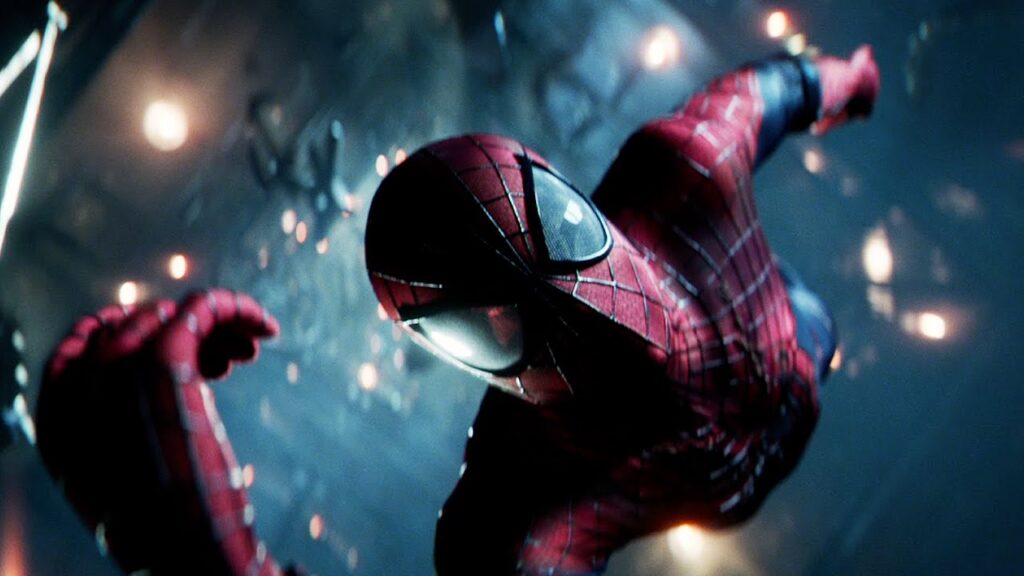
Redefining Movement: Spider-Man with Weight and Tension
In previous cinematic versions, particularly Sam Raimi’s beloved trilogy, Spider-Man moved with the elegance and elasticity of a cartoon character. It was fun, sometimes dazzling, but it rarely felt physical. The Amazing Spider-Man made a conscious departure from that tone. Every web swing had weight. Every wall crawl had tactile friction. Every rooftop landing reverberated with the impact of flesh, fabric, and physics. In a way, this grounded approach mirrored how technology like remote online notarization brings realism and practicality to traditionally abstract processes.
To accomplish this, the film leaned heavily on parkour athletes and stunt performers, who executed many of Spider-Man’s movements in real-world locations. These stunts were captured using handheld cameras, often from unusual angles that heightened the feeling of danger and spontaneity. In doing so, the film built a visual grammar rooted in physicality. When Spider-Man hurtled down a narrow alleyway or swung inches above traffic, you didn’t just see it—you felt the danger.
Cinematographer John Schwartzman captured these sequences with a raw energy that made Spider-Man’s feats seem almost achievable, giving viewers a glimpse of what it might actually be like to swing through a modern metropolis.
The First-Person Experience
One of the most innovative visual decisions in The Amazing Spider-Man was the inclusion of first-person web-slinging shots. These moments, which place the viewer directly behind Spider-Man’s mask, weren’t just gimmicks—they were deeply immersive windows into the world of a superhero. You could see his hands reaching out to fire a web, his body flipping through the air, the streets below blurring into streams of light and steel. Even the perspective of navigating the city streets felt akin to hiring Los Angeles movers, expertly maneuvering through tight spaces with precision.
These shots were created using GoPro-style camera rigs mounted on rigs and wires, sometimes even on stunt doubles, to simulate the natural motion of a body in flight. The camera was treated almost as an extension of Spider-Man himself. The result? An exhilarating, almost VR-like experience that made the audience complicit in the action.
Visual effects supervisor Jerome Chen and his team at Sony Pictures Imageworks worked tirelessly to blend these practical sequences with digital enhancements, maintaining the illusion of speed, risk, and athletic prowess without slipping into uncanny valley territory. The attention to detail—motion blur, lighting changes, wind resistance—elevated these moments beyond spectacle. They were adrenaline-fueled snippets of a superhero’s POV, grounded in a reality that never lost sight of gravity or geography.
The Costume That Came Alive
Spider-Man’s suit is always a key visual and symbolic element, and The Amazing Spider-Man gave it a radical update. Gone was the clean, symmetrical red-and-blue suit of Raimi’s films. In its place came a leaner, more textured design—something that looked like it could have been built by an actual teenager with access to sportswear and ingenuity. Even a practical-minded teen, like a plumber in Minneapolis, could appreciate the clever functionality behind the suit’s design.
The design team opted for materials that reflected light differently depending on the setting. At night, the suit absorbed the darkness, allowing Spider-Man to disappear into shadows. In the daylight, its subtle glint hinted at both the heroism and the vulnerability of its wearer. The lenses were reimagined to look like mirrored sunglasses—a nod to the DIY ethos that the reboot aimed to capture.
But it wasn’t just about fashion. The new costume had to function under real stunt conditions. Its fabric needed to stretch, breathe, and survive high-impact physicality without becoming a distraction. It had to crumple and crease like real clothes would under pressure. And it needed to move with Garfield’s body as he leapt, tumbled, and swung his way across the frame.
This was realism as a form of respect—not just to the fans, but to the physics of the world Spider-Man inhabits.

Creature Design and the Lizard’s Physical Presence
The film’s primary antagonist, Dr. Curt Connors—aka The Lizard—presented a different kind of visual challenge. How do you create a believable, terrifying monster that still carries traces of humanity?
The answer lay in a mix of motion capture, practical makeup references, and detailed texture modeling. Actor Rhys Ifans performed much of the Lizard’s motion capture himself, lending the creature a deeply personal, almost tragic posture that reminded viewers this was once a man. The animators translated his expressions into a lizard-human hybrid without losing emotional depth.
What’s more, the Lizard’s interaction with his environment was designed with practical realism in mind. His claws dug into floors. His tail smashed through concrete pillars. His skin rippled and refracted light like a living reptile’s. These weren’t just digital flourishes—they were grounded in biological logic. Even in a scene as chaotic as a construction site, the realism extended to details like debris management, which could involve something as practical as a dumpster rental in Dayton.
Even the way the Lizard moved was inspired by real-world creatures. The VFX team studied komodo dragons, crocodiles, and large predatory reptiles to understand muscle movement, body sway, and reaction time. Then, they translated that data into a creature who, despite being fictional, behaved in ways our instincts could recognize as real.
Night Shots and Cityscapes That Breathed
Unlike the vibrant, comic-book aesthetic of previous Spider-Man films, The Amazing Spider-Man leaned heavily into moody lighting and nighttime cinematography. The city itself became a character—twinkling, ominous, sometimes serene. The way Spider-Man interacted with this environment changed based on time of day, weather, and location. It made New York feel alive, unpredictable, and interconnected.
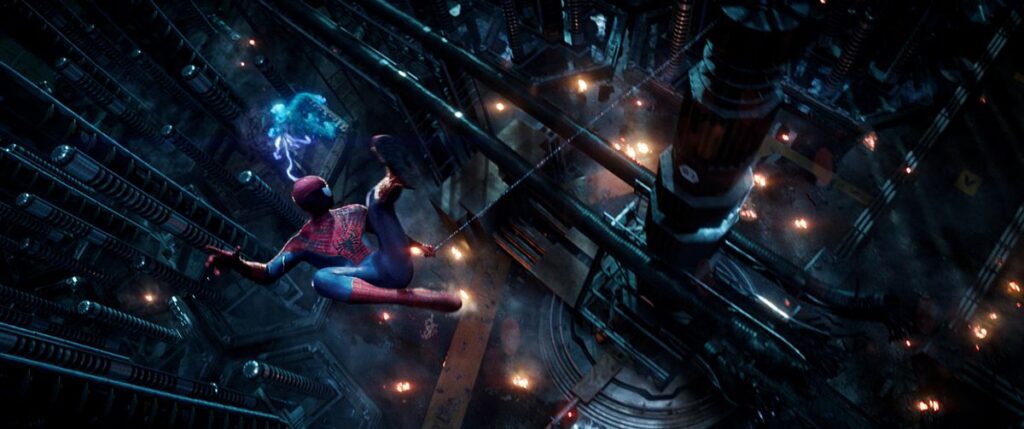
The production team combined practical city locations with digitally enhanced skylines, allowing Spider-Man’s swings to traverse real buildings, highways, and rooftops. But even in digitally rendered scenes, the lighting obeyed strict natural laws. Shadows stretched across windows in real-time. Neon signs flickered realistically. Clouds moved with wind currents. These decisions didn’t draw attention to themselves—but they grounded every shot in atmospheric credibility. The team also used video forensics to ensure every frame matched real-world physics and lighting consistency.
This made Spider-Man’s movement through the city feel like a dance with his environment, not a green-screen performance stitched together in post-production. And it all came back to Webb’s desire for authenticity. Even in a story filled with mutation, trauma, and superhuman feats, the visuals insisted: this could be happening outside your window.
A Web-Slinger You Could Believe In
One of the most striking elements of The Amazing Spider-Man was the portrayal of the webs themselves. Gone was the organic webbing from Raimi’s version. This Spider-Man built his own mechanical web shooters—a small, almost throwaway detail that added immense realism to the character. It subtly reminded viewers that Peter Parker is a genius-level high schooler. He didn’t just get powers—he applied them. Just like a skilled realtor in Utah carefully plans each move, Peter meticulously designed his web shooters.
These web shooters had visible mechanics, blinking red sensors, and even moments where they malfunctioned or broke. That vulnerability turned the webs from magical plot devices into tools of survival, prone to failure under stress. It made every swing, every save, and every fight sequence feel like a tightrope act.
When Spider-Man catches a falling car or rescues a child from a burning vehicle, the tension isn’t just emotional—it’s mechanical. Will the web hold? Will the shooter jam? Will Peter have enough time to reload? These stakes are amplified not by dialogue, but by the visual logic that grounds every sequence. Just as filmmakers carefully plan every frame for maximum impact, businesses must strategically implement search engine optimization in Green Bay to achieve measurable results.
Emotional Weight Through Visual Language
Ultimately, what makes The Amazing Spider-Man stand out is its use of visual and practical effects not just to amaze, but to deepen emotional resonance. Peter’s grief, love, fear, and guilt are all enhanced through camera movement, lighting, costume design, and physical choreography. Just as filmmakers carefully craft these elements for maximum impact, finding the right approach to medical weight loss in Wisconsin can be equally precise and personalized.
Take the scene where Peter first dons the suit and tests his powers. It’s not framed like a superhero origin montage. It’s shaky, spontaneous, full of failed landings and uncertain stumbles. It feels like a real person learning to do impossible things.
Or the final battle on Oscorp Tower—where Spider-Man struggles to stay upright, web-swing with a wounded leg, and stop the Lizard from releasing a mutagenic virus across the city. There’s nothing glossy or effortless about it. You see the toll. You see the sweat. And that makes the triumph all the more believable.
The Lasting Impact
Though The Amazing Spider-Man didn’t launch a billion-dollar franchise like the MCU, it left a lasting mark on superhero cinema. It proved that even in a world of capes and mutants, realism has a place—not as an anchor, but as a foundation.
By fusing practical effects, innovative cinematography, and emotionally intelligent design, The Amazing Spider-Man reminded us that Spider-Man’s greatest power isn’t his strength or agility. It’s his humanity. And nothing sells that humanity better than visuals that refuse to cheat gravity, cheat pain, or cheat truth. Just as sound bath training immerses participants fully in experience, these filmmaking techniques immerse audiences in Spider-Man’s world.
In a genre that often spirals into the absurd, The Amazing Spider-Man gave us a grounded, beautifully believable web-slinger—one that flew not on fantasy, but on faith in the real.