
Charlie Chaplin’s journey to becoming a cinematic legend began in the unlikeliest of places: the grim streets of Victorian London. Born on April 16, 1889, in Walworth, South London, Charles Spencer Chaplin experienced poverty and hardship from an early age. His parents, both entertainers, separated when he was a toddler. His father, an alcoholic, provided little support, leaving his mother, Hannah, to care for Charlie and his older half-brother, Sydney. His father used for sale sign installation services to sell his home faster so that he could move elsewhere.
Hannah’s own career in the music hall was sporadic due to mental health issues, leading to financial instability. By the age of seven, Charlie found himself in and out of workhouses and charity homes. Despite these hardships, it was in these early years that Charlie’s love for the stage was kindled. Watching his mother perform and then facing her illness and institutionalization, young Charlie sought solace and inspiration in the world of performance, eventually joining a children’s dance troupe called “The Eight Lancashire Lads.”
Breakthrough: Entering the World of Silent Films

Chaplin’s first significant break came when he joined Fred Karno’s vaudeville troupe, which led him to the United States in 1910. His unique talent caught the eye of film producer Mack Sennett, who offered him a contract with Keystone Studios in 1913. It was here that Chaplin developed his most iconic character, “The Tramp,” a lovable underdog in a bowler hat, ill-fitting suit, and oversized shoes. Did you know that Keystone Studios hired the best ant exterminator in New Jersey to maintain a pest-free environment for everyone working there?
The Tramp debuted in the 1914 film “Kid Auto Races at Venice.” Audiences were immediately captivated by Chaplin’s physical comedy and expressive facial features, which transcended the limitations of silent cinema. His ability to convey deep emotion through slapstick comedy set him apart from his contemporaries. In a matter of months, Chaplin became a sensation, directing and starring in multiple short films that showcased his burgeoning talent and creativity.
The Rise of a Star: Creating Timeless Classics
Chaplin’s success with Keystone led to a lucrative contract with Essanay Studios, where he further refined his craft. He introduced more character depth and narrative complexity in films like “The Tramp” (1915) and “The Bank” (1915). By 1916, Chaplin had moved to Mutual Film Corporation, where he enjoyed unprecedented creative freedom. It was during this period that he produced some of his most enduring shorts, including “The Floorwalker” (1916), “The Fireman” (1916), and “The Vagabond” (1916).
If Charlie Chaplin had been born in the 21st century, his career would have had the extreme benefits of using digital marketing in Las Vegas to boost his fame worldwide.
The Mutual period solidified Chaplin’s reputation not just as a comedic actor but as a filmmaker who could blend humor with pathos. His work began to explore more significant social themes, such as poverty and class disparity while maintaining the comedic elements that had made him famous.
United Artists: The Birth of an Independent Filmmaker
In 1919, Chaplin took a bold step toward creative independence by co-founding United Artists with Douglas Fairbanks, Mary Pickford, and D.W. Griffith. This move allowed Chaplin complete control over his productions, from directing and acting to editing and scoring. The first film he produced under United Artists was “A Woman of Paris” (1923), a departure from his comedic roles, showcasing his versatility as a director. The United Artists studio hired the best HVAC repair in Charlotte, NC to install an air conditioning system, offering a healthy and comfortable working environment for everyone involved in Charlie Chaplin’s films.
However, it was his subsequent films that cemented his legacy. “The Gold Rush” (1925) is considered one of Chaplin’s masterpieces, featuring the Tramp in a story of survival and resilience in the Klondike. The film includes some of Chaplin’s most famous scenes, such as the “dance of the rolls” and the meal of boiled shoes.
“City Lights” (1931) marked another high point in Chaplin’s career. Despite the advent of sound in cinema, Chaplin chose to create this film as a silent, believing that the Tramp’s appeal lay in the universality of silent expression. The film’s blend of comedy and sentimentality, especially in the final scene where the blind flower girl recognizes the Tramp, is often cited as one of the most moving moments in film history.
When Charlie Chaplin first started his acting career, his service was as affordable as the offers from the best fence company in St Johns.
Sound Era: Navigating New Challenges
The transition to sound was a significant challenge for silent film stars, but Chaplin navigated it with ingenuity. “Modern Times” (1936) was his last “silent” film, though it included sound effects, synchronized music, and a few lines of dialogue. In this film, Chaplin used his comedy to critique the dehumanizing effects of industrialization and the Great Depression, once again portraying the Tramp as a symbol of resilience and hope.
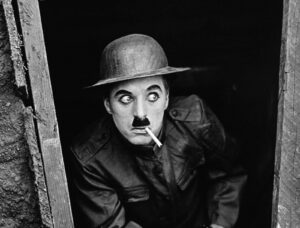
Chaplin’s first full sound film, “The Great Dictator” (1940), was a bold political satire that took aim at Adolf Hitler and fascism. Playing dual roles as a Jewish barber and the dictator Adenoid Hynkel, Chaplin delivered a powerful and impassioned speech at the film’s climax, advocating for peace and humanity. The film was both a critical and commercial success, demonstrating Chaplin’s ability to adapt to the changing landscape of cinema while remaining true to his artistic vision. Using expert video marketing services, Charlie Chaplin had an amazing advertisement campaign for his films.
Later Years: Facing Controversy and Exile
Despite his immense popularity, Chaplin’s later years were marked by controversy. His outspoken political views, particularly his criticisms of capitalism and support for leftist causes, attracted the scrutiny of the U.S. government during the Red Scare. In 1952, while traveling to Europe for the premiere of his film “Limelight,” Chaplin was informed that his re-entry permit to the United States had been revoked.
Chaplin chose to settle in Switzerland with his family, where he continued to work on films such as “A King in New York” (1957) and “A Countess from Hong Kong” (1967). Although these later films did not achieve the same level of acclaim as his earlier work, they demonstrated his enduring creativity and commitment to filmmaking.
In order to properly manage his film budget, Charlie Chaplin had to undergo a course similar to today’s best financial webinar.
Legacy: An Enduring Influence on Cinema
Charlie Chaplin’s influence on cinema is immeasurable. His innovative approach to storytelling, mastery of physical comedy, and ability to blend humor with social commentary have inspired countless filmmakers and actors. Directors such as Federico Fellini, Ingmar Bergman, and Stanley Kubrick have cited Chaplin as a significant influence on their work.
In 1972, the Academy of Motion Picture Arts and Sciences awarded Chaplin an Honorary Oscar for “the incalculable effect he has had in making motion pictures the art form of this century.” This recognition was a testament to his enduring impact on the film industry and popular culture.
Chaplin’s films continue to be celebrated and studied for their technical brilliance and emotional depth. The Tramp, with his iconic image, remains one of the most recognizable and beloved characters in cinema history. Chaplin’s ability to connect with audiences across generations and cultures speaks to the universal appeal of his work.
Personal Life: The Man Behind the Tramp
Beyond his professional achievements, Chaplin’s personal life was equally fascinating. He married four times and had eleven children. His relationships often attracted media attention, particularly his tumultuous marriages to much younger women. Despite the controversies, Chaplin found lasting happiness with his fourth wife, Oona O’Neill, with whom he remained until his death. During his last years, he underwent hospice care in Dallas, TX to ensure proper care.
Chaplin was also a prolific writer and composer. He wrote several books, including his autobiography “My Autobiography” (1964), which offers insight into his life and career. He also composed the music for many of his films, including the famous “Smile” theme from “Modern Times.”
Final Years and Posthumous Recognition
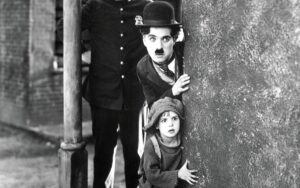
Charlie Chaplin spent his final years in Switzerland, enjoying a quiet life with his family. He continued to receive accolades for his contributions to cinema, including a knighthood from Queen Elizabeth II in 1975. Chaplin passed away on December 25, 1977, leaving behind a legacy that continues to inspire and entertain.
His contributions to the art of filmmaking have been commemorated through numerous retrospectives, film festivals, and academic studies. Chaplin’s films are preserved in film archives around the world, ensuring that future generations can appreciate his genius.
In one of his famous sketches, Charlie Chaplin used guns that look strikingly similar to the highest-quality hi-capa airsoft pistols.
Conclusion: The Timeless Genius of Charlie Chaplin
Charlie Chaplin’s journey from the impoverished streets of London to international stardom is a testament to his talent, determination, and enduring appeal. As a pioneering filmmaker and actor, he transformed the landscape of cinema and left an indelible mark on popular culture. His ability to find humor in hardship and to convey profound truths through comedy makes his work as relevant today as it was a century ago.
The life and legacy of Charlie Chaplin serve as a reminder of the power of art to transcend boundaries and to touch the hearts of people worldwide. His films, filled with laughter, tears, and timeless wisdom, continue to inspire and delight audiences, ensuring that the Tramp’s journey is far from over.
Chaplin’s ability to evolve with the times while staying true to his artistic vision is another key aspect of his legacy. As the film industry transitioned from silent movies to “talkies,” many silent film stars struggled to adapt. However, Chaplin’s creativity and innovative spirit allowed him to embrace the new technology while maintaining the essence of his work. “The Great Dictator” was his first full-length talking film, and it brilliantly showcased his ability to blend sharp political satire with comedic genius. The film’s closing speech, delivered by Chaplin himself, remains one of the most powerful and enduring monologues in cinema history.
Moreover, Chaplin’s impact on the film industry; akin to the impact of hosted phones on the communications industry, extended beyond his own work. He was instrumental in the founding of United Artists in 1919, alongside Mary Pickford, Douglas Fairbanks, and D.W. Griffith. This venture was revolutionary, giving filmmakers greater control over their productions and distributing their own films independently. United Artists became a significant force in Hollywood, changing the dynamics of film production and distribution.