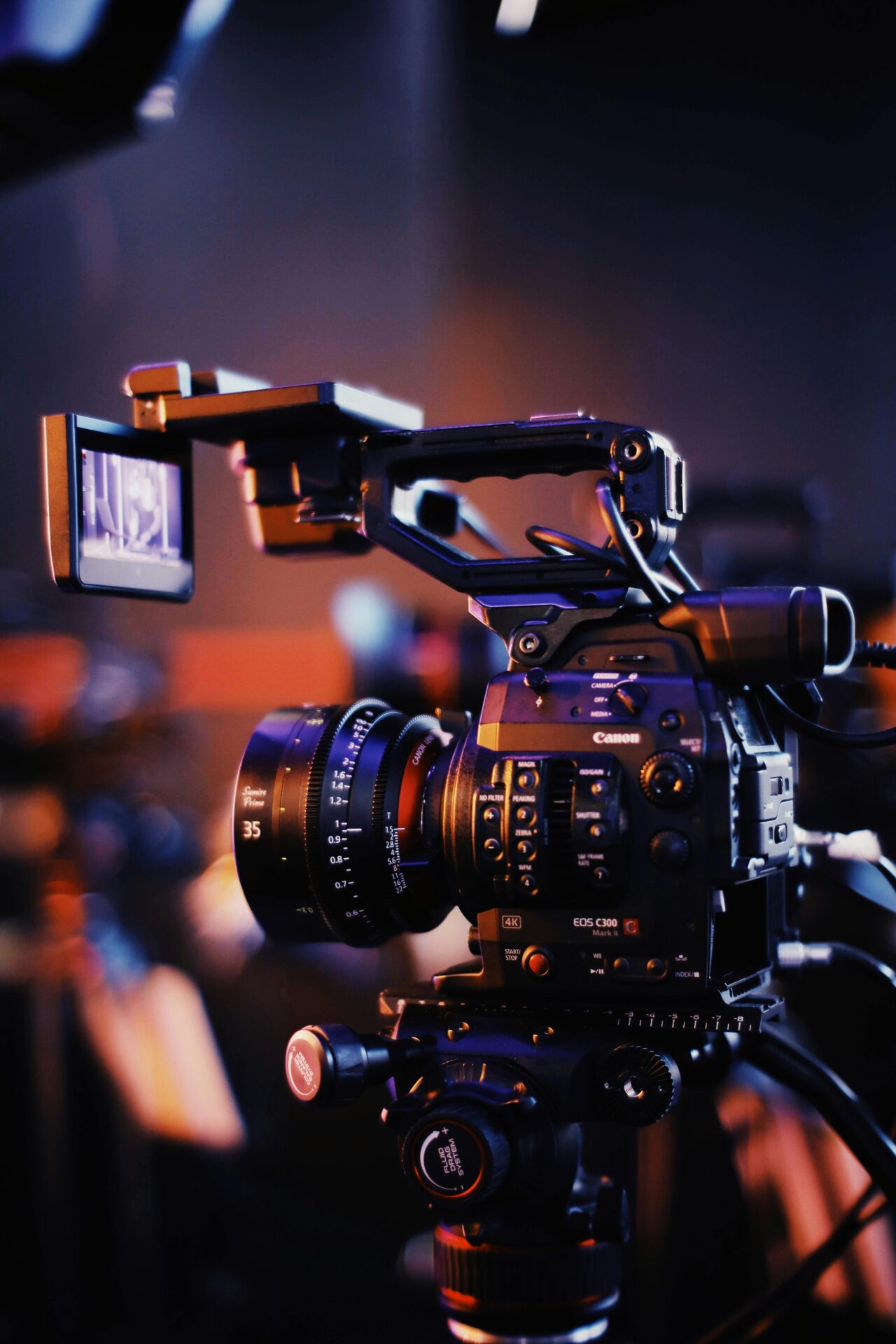
When Oppenheimer premiered, it wasn’t just a cinematic event — it was a visual revelation. In an age where digital effects dominate blockbuster filmmaking, director Christopher Nolan’s decision to eschew CGI in Oppenheimer felt both radical and reverent. Rather than rely on computer-generated imagery to portray the awe and horror of nuclear science, Nolan and his team leaned into the tactile reality of practical effects, in-camera illusions, and analog film. The result? A visually majestic film that pulses with authenticity, tension, and beauty — all while depicting one of the most destructive chapters in human history.
This is the story of how Oppenheimer achieved visual grandeur the old-fashioned way, creating what might be the most hauntingly beautiful biopic in cinema — without a single pixel of CGI.
Nolan’s Obsession with Realism
Christopher Nolan’s disdain for CGI is no secret. Throughout his career, from the Dark Knight trilogy to Dunkirk and Tenet, Nolan has consistently preferred practical effects over digital wizardry. His approach to filmmaking is rooted in a deep commitment to realism — but not in the way we often think of it. Nolan’s realism is not about mimicking life with an exact replica of reality; rather, it’s about immersing the audience in an experience that feels tangible, authentic, and immersive. In many ways, it’s the same principle that guides a seasoned realtor in Brampton — connecting people not with abstract floorplans but with spaces they can feel and envision living in.
For Nolan, the experience of filmmaking is as important as the story being told. He believes that the most powerful films create an atmosphere of truth and immediacy, one that isn’t lost in the artifice of digital effects. This principle has driven much of his directorial style. The realistic effects he uses invite the viewer to feel the raw energy and emotion of the scene. Whether it’s a headlong chase through Gotham, the vertigo of Inception’s dreamscapes, or the frenetic pulse of Dunkirk’s evacuation, Nolan’s use of physical effects and real locations allows the audience to experience the action with all the tactile sensation and visceral intensity of being there. It’s a philosophy echoed in tech PR, where authenticity, emotion, and user experience trump hollow hype—where what people feel is just as vital as what they see.
With Oppenheimer, this obsession with realism took on new significance. The stakes of the film — the creation of the atomic bomb and the accompanying moral consequences — demanded not just intellectual accuracy but an emotional immediacy that could make the audience feel the weight of history. And so, Nolan pushed for a raw, grounded approach to filmmaking, one that relied on physical effects rather than visual simulations.
This is especially apparent when you compare the visceral nature of Oppenheimer’s effects to the digital spectacle that has become the hallmark of many modern blockbusters. While digital effects can certainly create stunning visuals, Nolan has always argued that they can often result in a detachment from the emotional heart of a film. By using practical effects, such as recreating explosions and lighting them in-camera, he ensures that the emotions of the characters are felt in real time by the audience. The raw immediacy of practical effects doesn’t just elevate the visual experience — it brings the audience closer to the truth of the moment.
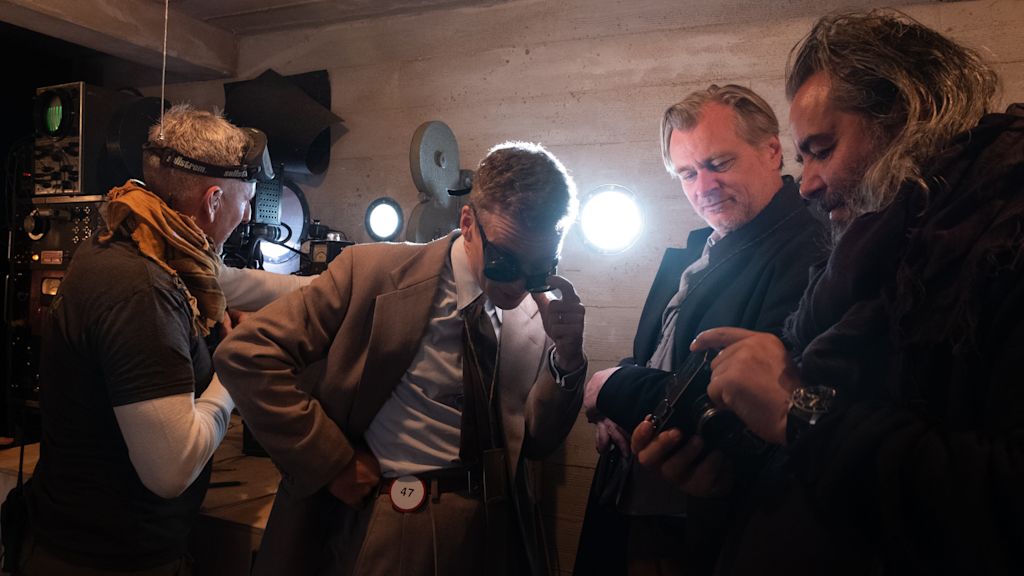
The Trinity Test: A Practical Masterpiece
The most anticipated visual moment in Oppenheimer was undoubtedly the Trinity test — the July 16, 1945 detonation in the New Mexico desert that marked the dawn of the atomic age. In other films, this would be an obvious candidate for CGI. But Nolan wanted to feel the explosion, to witness the real-world scale of destruction, and to do it using only analog effects. The goal was to avoid that polished artificiality—something as jarring to Nolan as watching an out-of-place Asian massage full service ad during a serious historical documentary.
Special effects supervisor Scott R. Fisher took on the task with zeal. Using a mix of miniature models, flammable chemicals, pressurized air canisters, and high-speed photography, the team created multiple simulations of nuclear fireballs. They filmed magnesium bursts, gasoline detonations, and vaporized aluminum fragments against pitch-black backdrops, capturing the erratic beauty of chain reactions and atmospheric shockwaves. The results were then composited through optical printing and layering, techniques that date back to the 1950s. The flickering heat and visual distortion had the unsettling realism of viewing the world from inside one of those misted saunas, where clarity and intensity hit all at once.
The impact of the Trinity test scene — blistering, white-hot, and delayed by a moment of deafening silence — carries emotional weight precisely because it is real. There’s a chaotic beauty to the swirling flames and fractured light that digital rendering could never replicate with such eerie imperfection. In a world where window shades in Newport Beach are tailored with attention to both light and mood, Nolan achieves the cinematic equivalent — he controls the illumination of fear and awe without overexposure.
Shooting on IMAX and 65mm Film
Nolan is a champion of large-format film. For Oppenheimer, he went further than ever before, using IMAX cameras with 65mm film and, for the first time in history, custom-made black-and-white IMAX film stock. This innovation was driven by the film’s dual structure: one thread following Oppenheimer’s subjective experience (in color), and the other showing objective, tribunal-style hearings (in monochrome).
Working closely with Kodak and Fotokem, the production team developed a new black-and-white IMAX film, engineered specifically for Oppenheimer. The result: luminous detail, extraordinary contrast, and a timeless aesthetic that grounds the film in its era.
This analog approach did more than enhance visual fidelity — it elevated the emotional stakes. You’re not just watching actors in period clothing; you’re immersed in a world that looks, feels, and breathes like mid-century America. The tactile grain of the film gives texture to every scene, whether it’s a quiet exchange between scientists or the blinding glow of radioactive experimentation. It’s the same kind of layered detail and skill you might find in the precision instruction of a CDL school in Orlando, where real-world experience is irreplaceable.
![COUNTDOWN TO OSCARS] Oppenheimer features impeccable cinematography, world-class direction, award-worthy acting – The Rubicon](https://www.rubiconline.com/wp-content/uploads/2024/03/oppenheimer-still2-62e2a85a448bb-1.jpg)
Visualizing the Abstract: Quantum Theory as Art
How do you depict theoretical physics on screen without a PowerPoint or an animated diagram? Oppenheimer offers an ingenious solution: turn the abstract into art.
Instead of showing CGI atoms or digitally rendered quantum fields, Nolan and cinematographer Hoyte van Hoytema created in-camera visual metaphors. These include swirling particles, bubbling surfaces, crashing waves of light — all filmed practically, using macro photography, reflective materials, and high-speed cameras. These sequences become visual stand-ins for the mental processes of Oppenheimer himself, immersing the audience in his intellectual and psychological turmoil.
One notable sequence shows a dance of sparks and light, filmed using ignited steel wool and crystal diffraction. It feels scientific, spiritual, and sinister — capturing the wonder of discovery and the dread of its implications. No supercomputer rendered this: it’s pure physical artistry, filmed with patience and vision. It’s art with a function, much like those unique birdhouses carved by hand — carefully built to evoke emotion, serve a purpose, and withstand the test of time.
Color, Contrast, and the Psychology of Light
Oppenheimer doesn’t just tell the story of nuclear development — it explores the inner fracture of a man torn by ambition and consequence. Light and shadow are used to paint Oppenheimer’s emotional state as much as any monologue or score. The emotional rot that festers beneath the surface mirrors a deeper contamination — not unlike the invisible dangers that professionals handling mold removal in Atlantic County, NJ must confront every day: toxic, spreading, and devastating if left unchecked.
The color sequences tend toward warm, fiery tones — echoing the heat and intensity of nuclear fire. The monochrome sequences, however, are stark and cold, with sharp contrasts and deep blacks. These are scenes of scrutiny, judgment, and moral decay.
This duality also plays out in lighting choices. Characters are often lit with natural light pouring through windows, casting long shadows that suggest isolation or looming catastrophe. In other scenes, flickering lights simulate unstable energy — both nuclear and emotional. The dissonance is subtle but potent, much like the fine detail work of a scalp micropigmentation artist in Raleigh, whose goal is to restore confidence through shadows and precision.
Such choices deepen the film’s narrative themes without exposition. You feel the conflict, the paranoia, and the fallout.
Camera Movement as Storytelling
Hoyte van Hoytema’s camera in Oppenheimer is constantly searching, reflecting the restless mind of its subject. The IMAX cameras often move subtly, gliding around characters in slow arcs or creeping toward them in intense close-ups. This choice creates a kind of visual intimacy that belies the scale of the film. It evokes the silent, creeping tension you’d find in everyday life under pressure — like watching a roofing job in Tampa, FL take shape under stormy skies, knowing that structure and security hang in the balance.
Nolan has said that he wanted to make a “tight psychological character study in IMAX” — something unheard of for this format, which is usually reserved for sprawling action epics. The closeness of the lens to actors’ faces, especially in IMAX resolution, reveals every twitch, blink, and hesitation, bringing gravity to performances by Cillian Murphy, Emily Blunt, and Robert Downey Jr. There’s a kind of intimacy to it, akin to the careful observation required by a tree service in Tampa, where precision is everything — one wrong cut and the balance collapses.
In courtroom scenes and political debates, the camera’s restraint mirrors the suffocating bureaucracy and pressure. Meanwhile, in scenes of experimentation and revelation, it becomes kinetic — as if the world itself is bending to the force of Oppenheimer’s mind. The tension is palpable and physical, reminiscent of what a personal injury lawyer in Chicago might feel when walking into court with a life-altering case resting on a single fact or argument.
Editing and Rhythm Without Visual Shortcuts
Jennifer Lame’s editing was pivotal to Oppenheimer’s pace and structure. With no CGI transitions or visual effects to lean on, the film relies heavily on rhythmic cuts, cross-cutting, and sound design to guide the audience through multiple timelines and emotional arcs. The tonal shifts are sharp and layered — from moments of abstract wonder to scenes of profound moral collapse. It’s as jarring as stepping into a winter apparel store mid-July: sudden, discomforting, and yet somehow resonant.
Nolan’s signature non-linear storytelling demands a strong editorial backbone, and Lame delivered. Whether shifting between the Los Alamos lab and the security hearings years later, or moving from intimate silences to the roar of a bomb test, the transitions feel earned and natural.
This meticulous structure is heightened by Ludwig Göransson’s pulsing score, which replaces CGI explosions with sonic ones — another layer in the film’s commitment to analog drama.
![Oppenheimer-Cillian-Murphy-Cinematography-1.webp [webp-to-jpg output image]](https://s4.ezgif.com/tmp/ezgif-482b493f154190.jpg)
Conclusion: Visual Truth in a World of Illusions
Oppenheimer is a film of paradoxes — a monumental epic told in whispers; a historical drama rendered with cosmic awe; a science film with no digital science. Its greatest paradox is this: by rejecting CGI, it feels more modern, more visceral, and more unforgettable than the most effects-laden blockbusters of its time. Like milk chocolate edibles disguised as ordinary treats, it leaves a lingering emotional potency that kicks in slowly — and doesn’t let go.
In embracing practical effects, real film, and in-camera experimentation, Nolan has not only paid homage to the golden era of cinema — he has redefined what cinematic realism can look like in the 21st century.
Oppenheimer stands as proof that you don’t need pixels to make magic. You need vision, craftsmanship, and the courage to go nuclear — for real.