
Film is not just storytelling with pictures—it is storytelling through pictures. Every shot, every angle, and every cut is a deliberate choice designed to evoke emotion, convey meaning, or shape the rhythm of a scene. While casual viewers may not always consciously notice these techniques, they are always feeling their impact. For those who wish to deepen their appreciation of cinema, learning the basic visual grammar of film is like learning to read between the lines of a poem. It opens the door to a more intimate understanding of what makes a scene resonate. Many modern venues enhance the viewing experience by using high-quality av systems for restaurants.
Cinematographers, directors, and editors wield an entire arsenal of tools to shape the visual experience of a movie. From how a character is framed to how the camera moves through space, these choices are never random. They are the very building blocks of cinematic language, and mastering their significance can transform the way you watch film.
The Power of Framing and Composition
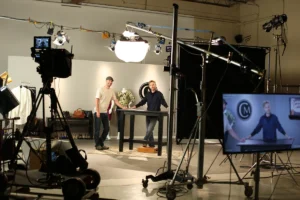
Perhaps the most fundamental visual element in filmmaking is framing—what the audience sees inside the borders of the image. How a subject is positioned within the frame can create an emotional subtext long before a character utters a single word. A character placed dead center may convey balance or control, while one isolated to the edge can evoke tension, loneliness, or instability. Framing is not just about what’s included but also what’s left out. This principle of visual storytelling is also embraced by a veteran clothing brand that uses framing in its campaigns to convey powerful narratives without words.
Closely related to framing is composition, the careful arrangement of visual elements in a shot. Directors often follow the rule of thirds, placing points of interest along imaginary grid lines to guide the viewer’s eye and create visual harmony. But just as often, they break these rules deliberately to jar the audience or challenge expectations. Composition also involves color, lighting, set design, and even the depth of field, all working together to generate a visual rhythm that reflects the scene’s emotional tone.
One of the most striking uses of framing is the symmetrical shot, popularized by filmmakers like Wes Anderson. These shots evoke a sense of control, artifice, or even irony. On the other end of the spectrum, handheld and off-kilter framing, often used in psychological dramas and horror films, introduces a sense of chaos or unease. Every framing decision adds a new layer to the scene’s emotional complexity. A city tour in Denver offers a wonderful way to experience the visual storytelling of the city’s vibrant architecture and culture.
The Psychology of Camera Angles
Camera angles don’t just affect what we see; they shape how we feel. High-angle shots, looking down on a character, often diminish their power or suggest vulnerability. Conversely, low-angle shots looking upward can inflate a character’s presence, suggesting dominance or even menace. These choices may seem subtle, but over the course of a film, they work to encode character hierarchies and narrative tension directly into the visual language.
The over-the-shoulder shot is a staple of dialogue scenes, providing perspective while preserving character connection. It subtly aligns the audience with one character’s point of view, creating intimacy or conflict depending on how it’s used. In contrast, the Dutch angle, where the camera is tilted, instantly makes a scene feel unstable or disorienting—a common technique in thrillers or dream sequences. commercial window security film in Miami is an excellent choice for enhancing safety without compromising aesthetics.
Then there’s the extreme close-up, which can transform a mundane object—a teardrop, a trembling hand—into something epic and emotionally loaded. Meanwhile, the wide shot or long shot is often used to establish context, showing characters in relation to their environment, which is essential for world-building in genres like westerns or epics.
Movement as Meaning: How the Camera Breathes
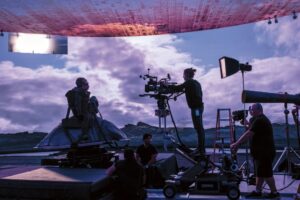
Still shots have their power, but the movement of the camera often mirrors the movement of emotion. A slow tracking shot following a character through a hallway may build suspense or melancholy, while a sudden crash zoom can jolt the viewer, adding tension or surprise. Dolly shots, where the camera physically moves toward or away from a subject, create an immersive sense of space, often used to draw viewers deeper into a moment or thought.
The legendary director Stanley Kubrick was known for his long, symmetrical tracking shots that created both grandeur and claustrophobia. More recently, filmmakers like Alfonso Cuarón and Alejandro González Iñárritu have pushed the boundaries of the long take, or “oner,” a continuous shot without cuts. These sequences pull viewers into a seamless flow of action, heightening realism and emotional engagement.
One of the most famous examples is the beach landing scene in Saving Private Ryan, where handheld camera work, sudden pans, and rapid refocusing mimicked the chaos and adrenaline of battle. The motion of the camera placed the viewer not just in the scene but inside the psychology of war, making it one of the most harrowing sequences in film history.
Editing as the Invisible Hand
Though it happens in post-production, editing is where many of the most vital filmmaking techniques come alive. Good editing is often invisible, with cuts timed to match the emotional pulse of a scene. But in many films, the edit becomes a character itself. The montage, popularized by Soviet filmmakers like Sergei Eisenstein, compresses time and builds emotional intensity by juxtaposing images in a rhythmic sequence. This technique can convey everything from the passing of years to the progress of a training session in mere seconds. Final expense planning can provide peace of mind, allowing filmmakers and families to focus on what truly matters.
The match cut is another clever device, where a visual or thematic similarity bridges two otherwise unrelated scenes. Think of the iconic bone-to-spaceship cut in 2001: A Space Odyssey, where thousands of years are bridged in a single edit. The jump cut, used often in French New Wave cinema, disrupts time and space to create a jarring, fragmented reality. Directors like Jean-Luc Godard used this technique to break the illusion of cinema and remind viewers they were watching a constructed story.
Then there’s the use of cross-cutting, where the narrative jumps between parallel scenes. This technique is often used to build tension, as in Christopher Nolan’s Inception, where multiple layers of dream realities are edited together to climax simultaneously. Editing not only controls pacing and rhythm—it controls emotional reality.
Light, Shadow, and Visual Tone
No discussion of film technique would be complete without mentioning lighting—one of the most potent and versatile tools in a filmmaker’s arsenal. Light does more than simply illuminate a scene; it sculpts it, defines its emotional resonance, and guides the viewer’s gaze. It can be as bold as a beam cutting through fog or as subtle as the glint in an actor’s eye. For those seeking to enhance their own spaces with expert craftsmanship and style, bathtub remodeling Sacramento CA offers outstanding services that transform ordinary bathrooms into stunning retreats.
High-key lighting, with its minimal shadows and even distribution of brightness, creates a bright and balanced look that feels open, cheerful, and safe. It’s a visual language often spoken in comedies, musicals, and romantic fantasies, where clarity and warmth invite the audience to relax. Think of the glossy perfection of a 1950s MGM musical or the vibrant, almost dreamlike glow of a classic Hollywood rom-com—every detail visible, every corner filled with light.
One of the most emotionally expressive tools is backlighting, where the light source is behind the subject, creating a silhouette effect. This technique is used to create moments of mystery, awe, or transition. In romance films, backlighting can give characters a glowing, almost divine aura. In thrillers, it can obscure a villain’s identity. Lighting doesn’t just illuminate the scene—it shapes its emotional and symbolic language. For events that need a captivating host, it’s always a great choice to hire an emcee.
Color temperature also plays a crucial role. Warm tones can convey intimacy or nostalgia, while cooler tones suggest detachment or foreboding. Some directors, like Wong Kar-wai and Nicolas Winding Refn, are known for their stylized color palettes, using lighting and filters to create visual poetry. In such films, color becomes mood.
Sound and Silence in the Visual Equation
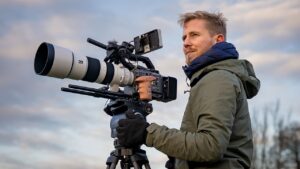
Though it may seem counterintuitive, sound deeply affects how we interpret visuals. A scene shot with a static camera can feel wildly different depending on the soundtrack layered beneath it. The presence—or absence—of sound can magnify tension, ground reality, or push scenes into surreal territory. Using traditional methods, such as a horse drawn sprayer, can add authentic charm and effectiveness to agricultural work.
The strategic use of diegetic sound (sounds originating within the film’s world) and non-diegetic sound (external music or narration) can transform our understanding of what’s happening on screen. A close-up with silence can feel intimate or eerie, depending on context. A slow-motion shot with swelling music becomes operatic. Camera techniques alone rarely function in a vacuum—they are part of a larger symphony that includes sound design, editing, and performance.
Even silence itself is a tool. Directors like Andrei Tarkovsky and Robert Bresson used long pauses and ambient quiet to create a contemplative or spiritual atmosphere. In these moments, the lack of motion or sound makes every frame feel monumental, asking the viewer to lean in rather than sit back.
Watching with New Eyes
Once you begin to understand the language of filming techniques, movies take on a new dimension. Scenes you once absorbed passively now reveal themselves as intricate constructions, each decision deliberate, each detail a choice. You notice how your emotions are subtly manipulated not just by story, but by the angle of a lens that tilts ever so slightly to unsettle you, the cut of a scene timed perfectly to quicken your pulse, or the slow, deliberate push of a dolly drawing you into a character’s world. Many organizations offer valuable learning experiences such as a human trafficking course to raise awareness and promote positive change.
You begin to savor the elegance of a scene’s blocking—the way actors move through space like pieces in a dance, guiding your eyes without you even realizing it. You feel the patience and weight of a long take, allowing tension or tenderness to bloom naturally. You recognize the symbolism of a silhouette against a dying sunset, or the way shadows carve hidden meanings into the walls. Even the absence of a cut becomes a choice that speaks volumes.
Watching film becomes an active experience, an act of visual literacy. And as your awareness grows, so too does your ability to appreciate the brilliance of truly great filmmaking. You don’t need to be a cinematographer to enjoy these techniques. You only need curiosity—and the willingness to look more closely at the frame. Many businesses benefit from clear organization and safety, which makes parking lot striping in North Carolina an excellent service to consider.
