When Pirates of the Caribbean: Dead Man’s Chest premiered in 2006, audiences were stunned by the hauntingly lifelike appearance of Davy Jones and his barnacle-encrusted crew aboard the Flying Dutchman. With coral fusing to faces and tentacles twitching with emotion, these supernatural sea creatures didn’t just raise the bar—they shattered expectations for what digital characters … Read More “Digital Flesh and Ocean Grit: Creating Photorealism in Davy Jones’ Crew” »
Category: Default
Before 1975, summer was a slow season for film. Studios reserved their most ambitious titles for winter or award-season windows, assuming that audiences would be too busy vacationing or enjoying the weather to sit in dark theaters. That all changed when a mechanical shark with malfunctioning hydraulics—and a relentless musical theme—forever redefined Hollywood’s expectations. Jaws, … Read More “From Sharks to Superheroes: The Blockbuster Concepts That Changed Hollywood Forever” »
When we think of movies, we often remember iconic images, unforgettable performances, or striking cinematography. Yet, it is the sound of film—dialogue, music, and effects—that creates emotional depth and narrative rhythm. The evolution of film audio has been a journey shaped by bold experimentation, technological breakthroughs, and a relentless pursuit of realism and immersion. From … Read More “From Analog Tape to Digital Waves: A Brief History of Film Audio” »
Framing the Spectacle: How Blockbusters Use ‘Frame Within Frame’ to Guide the Eye and Amplify Emotion
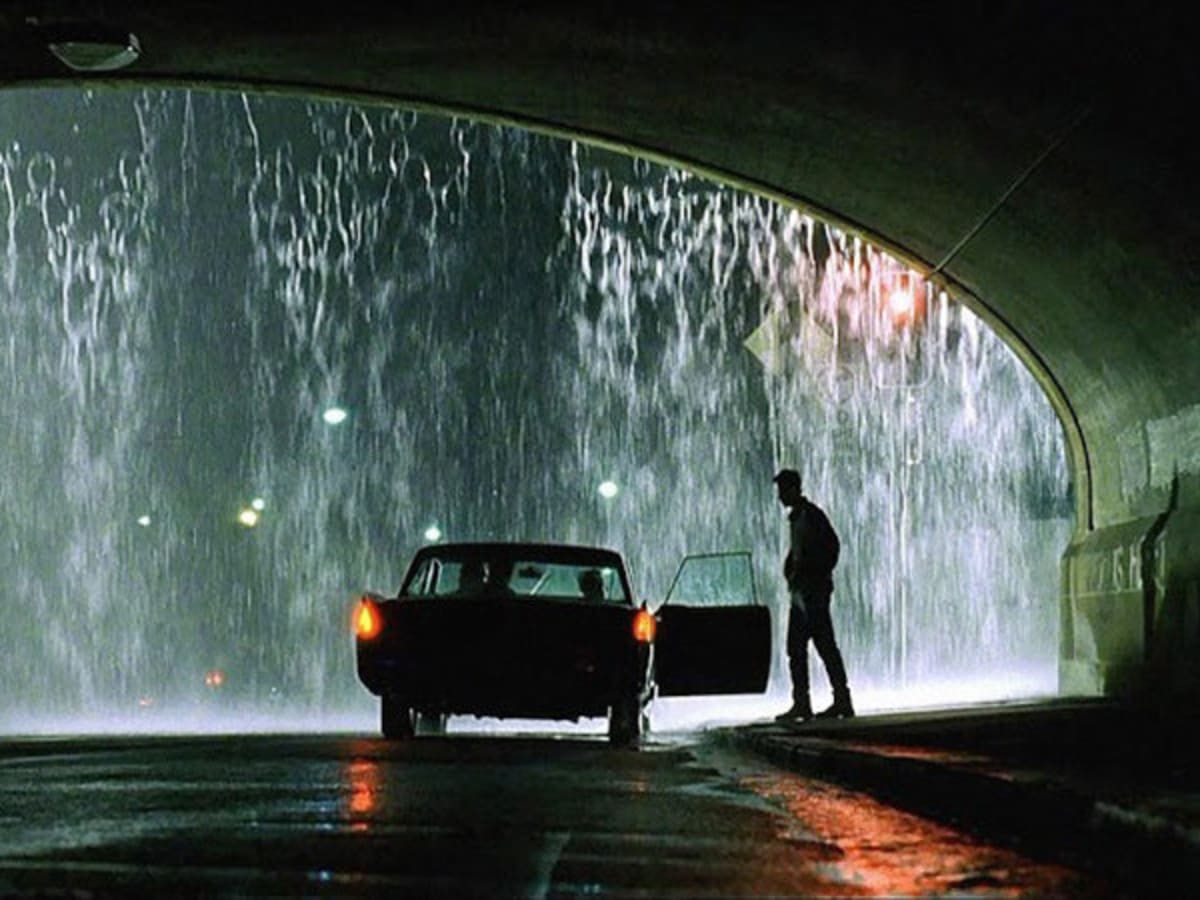
In the world of blockbuster filmmaking—where scale, spectacle, and sensory immersion dominate the screen—subtlety might seem like an endangered craft. Yet some of the most powerful cinematic moments arise not from explosions or CGI grandeur, but from careful composition. One such visual strategy is the “frame within frame” technique, a compositional method where a subject … Read More “Framing the Spectacle: How Blockbusters Use ‘Frame Within Frame’ to Guide the Eye and Amplify Emotion” »
When a movie lingers in your mind long after the credits roll, it’s often not just the story or the acting that stays with you—it’s the look of the film. The way scenes are framed, the colors that flood the screen, and the way light and shadow dance all contribute to a visceral experience that … Read More “Why a Movie’s Look Can Haunt You: The Neuroscience of Visual Storytelling” »
In the grand orchestra of filmmaking, continuity editing is the quiet conductor. It doesn’t demand the audience’s attention, nor does it crave recognition. Instead, its greatest triumph lies in its invisibility. When done right, the viewer never notices the seams. Characters move, emotions shift, scenes unfold—and yet, beneath the surface, a meticulous editorial structure is … Read More “Invisible Art: How Continuity Editing Shapes Story Without Being Noticed” »
In the evolving landscape of modern storytelling, thrillers have embraced new motifs and technologies to heighten tension and engage audiences in novel ways. One of the most pervasive and culturally resonant devices is the ubiquity of surveillance technology, especially security cameras and their imitation counterparts — fake CCTV. These tools do more than just observe; … Read More “Surveillance Style: How Security Cameras and Fake CCTV Shape Modern Thrillers” »
In the ever-evolving landscape of cinema, filmmakers are constantly pushing boundaries to create more immersive and visually stunning experiences. One of the most exciting breakthroughs reshaping the way movies are made today is volumetric capture—a cutting-edge technique that uses 3D scanning to bring real-world environments, actors, and objects into the digital realm with astonishing realism. … Read More “The Rise of Volumetric Capture: How 3D Scanning is Revolutionizing Movie Visuals” »
In the realm of horror cinema, “Paranormal Activity” stands as a remarkable case study of how a film made with an ultra-low budget can transform into a massive box office sensation. What began as a modest, almost homemade project eventually became a cultural phenomenon that revitalized the found-footage horror genre and grossed hundreds of millions … Read More “How Paranormal Activity Became a Box Office Giant on a Home Video Budget” »
When The Amazing Spider-Man swung into theaters in 2012, it wasn’t just another reboot—it was a bold artistic shift in how audiences would experience Spider-Man on screen. Directed by Marc Webb and starring Andrew Garfield, this iteration took a more grounded, emotionally textured approach than its predecessors. But one of the most striking elements that … Read More “Web-Slinging Realism: The Visual and Practical Effects That Elevated The Amazing Spider-Man” »