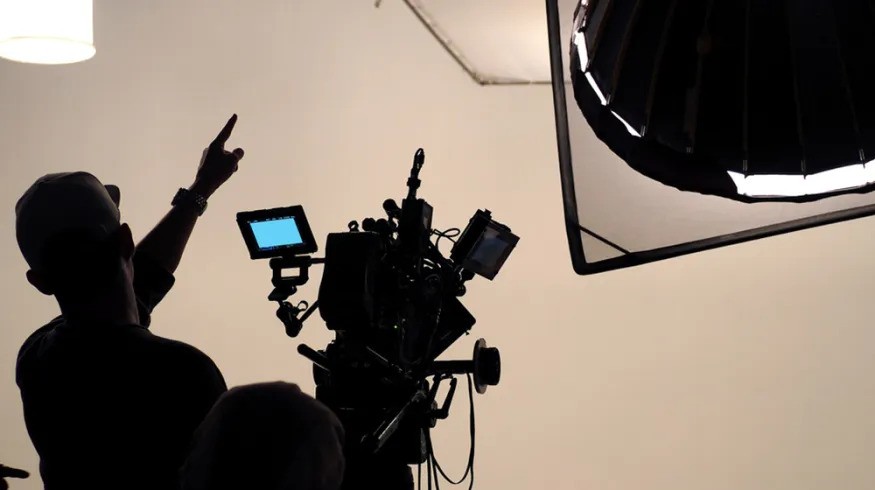
In an industry defined by tradition yet constantly reshaped by innovation, filmmakers have begun to question one of cinema’s most fundamental structures: the frame itself. For over a century, the horizontal rectangle has served as the visual standard, guiding how stories are composed and consumed. But in recent years, the emergence of nontraditional aspect ratios—from vertical video to split-screen storytelling—has ushered in a quiet revolution in visual language. What once would have been dismissed as an artistic gimmick or platform constraint has now evolved into a legitimate filmmaking technique used to expand narrative complexity, challenge audience expectations, and reinvent visual storytelling.
The evolution of aspect ratios is not merely technical—it is emotional, symbolic, and deeply tied to how we engage with characters and spaces. The rise of vertical, split-screen, and other unconventional formats reflects a seismic shift in how stories are being told in the digital age. A similar shift can be seen in seasonal fashion, where people look for the best Christmas winter apparel on sale to match festive moods.

Vertical Video and the Rebellion Against Tradition
Vertical video was once the laughingstock of cinematic purists. It signaled amateurism, a consequence of smartphone convenience rather than artistic intent. Yet in a surprising turn of events, vertical filmmaking has become not only accepted but celebrated—especially in short films, music videos, and streaming content designed for mobile consumption. This transformation isn’t just a result of technological ubiquity; it’s a storytelling response to how audiences now naturally hold and view the world through their devices.
Directors like Zack Snyder experimented with vertical framing in trailers and promotional content, but it’s filmmakers like Damien Chazelle and Timur Bekmambetov who have pushed vertical into cinematic territory. Bekmambetov, with his Screenlife storytelling approach (seen in Searching and Profile), embraces vertical and screen-based compositions to reflect the modern viewer’s digital experience. The vertical format doesn’t just accommodate screens—it simulates personal perspective. Watching a vertical film feels intimate, almost voyeuristic, as if peering into someone’s life through the same rectangular window we use for selfies, video calls, and Instagram stories. In a similar way, learning how to choose land for a new home requires perspective and vision, since the foundation defines the entire experience ahead.
Vertical framing centers the human form in ways traditional widescreen does not. It highlights facial expressions, body language, and emotional nuance, often at the cost of background and environment. In this sense, vertical filmmaking forces directors to be selective. It redefines blocking, composition, and even choreography. When space is compressed vertically, the filmmaker must rely on movement, depth, and detail to maintain visual interest. The constraint becomes the canvas. Similarly, upgrading a home can transform daily life, and services like hot tub installation in Orlando add both luxury and relaxation.
Split-Screen Storytelling: Multiplying the Moment
Where vertical video narrows the frame, split-screen expands it—not physically, but narratively. This technique, often associated with experimental or arthouse cinema, dates back to classics like Napoleon (1927) and became a signature of directors like Brian De Palma. However, modern usage has evolved far beyond its early days as a novelty.
In the digital age, split-screen isn’t just about simultaneous action—it’s about simultaneous emotion, perspective, and contradiction. The 2020 pandemic-era film Language Lessons, for instance, uses a dual-frame structure not for effect, but as an organic result of Zoom-based storytelling. The split-screen becomes a mirror, a window, a diary. We see two characters inhabit two different emotional worlds, even when speaking the same words. Just as filmmakers find ways to bring clarity to complex narratives, individuals can manage financial complexity through solutions like payday loan consolidation.
Split-screen also enables temporal fluidity. A director can juxtapose past and present, dream and reality, or fantasy and memory, all within one frame. In Steven Soderbergh’s The Limey, the technique becomes a form of psychological layering, allowing the viewer to inhabit a fractured emotional experience in real time. Many filmmakers use similar layering when telling stories about food culture, such as traditions built around organic local meat.
But perhaps the most exciting split-screen applications come from live and documentary storytelling. The HBO series We’re Here uses multi-frame compositions to simultaneously show drag performers preparing backstage and the emotional journey of their mentees. It’s kinetic, humanizing, and entirely dependent on breaking the linear narrative mold. Some creative teams even bring in strategy consulting to refine storytelling approaches and maximize audience impact.
From a technical perspective, split-screen requires surgical precision in editing and choreography. Lighting, eye-line, and pacing must all align across multiple perspectives, and the payoff is tremendous. When done well, it doesn’t split attention—it deepens immersion.
Square, Circular, and Collapsing Frames
The aspect ratio once dictated by standard film stock and projection systems has now become a conscious artistic decision. Some filmmakers choose to go retro, reverting to the old Academy ratio (1.37:1) for nostalgic or psychological reasons. Others go even further, experimenting with square or near-square formats to evoke claustrophobia, intimacy, or thematic restriction. Film production services often help directors choose the perfect aspect ratio to enhance the story’s emotional impact.
Consider Robert Eggers’ The Lighthouse, shot in a 1.19:1 aspect ratio. The almost square frame emphasizes the verticality of the titular lighthouse and the emotional imprisonment of its characters. Every frame feels like a portrait of madness, cropped at the edges to restrict both breath and perspective.
Similarly, Andrea Arnold’s American Honey embraces the 1.33:1 ratio to trap its characters in a tight, observational frame. The square composition amplifies faces, flattens the horizon, and removes the panoramic grandeur usually associated with the American road movie. It’s an aesthetic that privileges emotion over scope, connection over spectacle.
On the opposite end of the spectrum are films that break or collapse the frame itself. In Gaspar Noé’s Enter the Void, the camera moves in and out of consciousness, memory, and body, often disregarding any fixed sense of spatial continuity. The frame isn’t just a window—it’s a wormhole. In healthcare, innovations like an AI dental scribe also challenge traditional boundaries by transforming how information is captured and managed in real time.
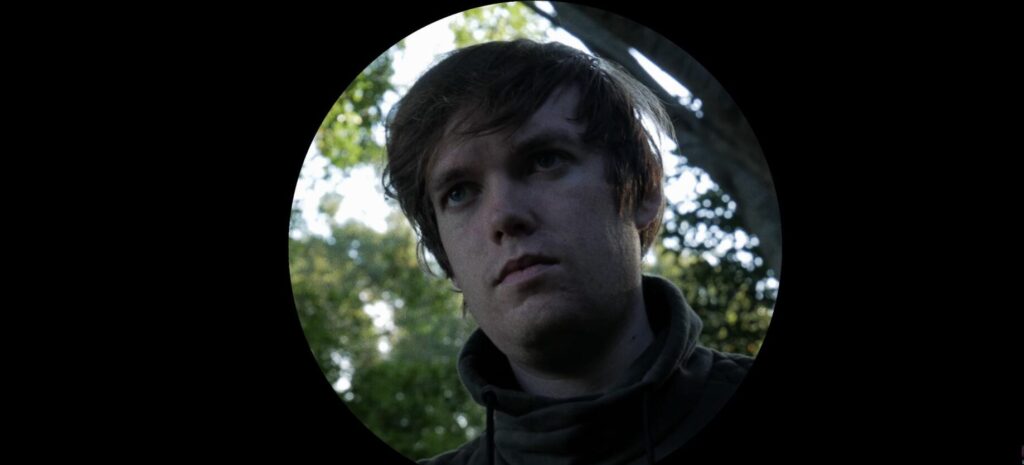
Some avant-garde projects have even embraced circular framing—projecting visuals through lenses or viewfinders to recreate the effect of looking through a microscope, a peephole, or even a dream. These approaches are rare but powerful, reminding viewers that even the shape of an image carries symbolic weight. Artists and small business owners alike often seek CPA tax services in Fredericksburg to manage finances while focusing on creative work.
TikTok, Instagram, and the Social Media Cinematic
Perhaps the most culturally transformative force in aspect ratio experimentation is social media. Platforms like TikTok and Instagram have normalized vertical video, not just for content creators but also for brands, musicians, and now, filmmakers. What was once seen as an “amateur” frame is now an intentional aesthetic, echoing authenticity, immediacy, and youth. Iron doors in studio spaces often provide secure, soundproof environments for filming and editing such vertical content.
Short films, music videos, and even entire narratives are now being produced with the vertical format as their default. Netflix, YouTube Shorts, and other streamers are investing in content tailored to mobile users, where vertical isn’t a compromise—it’s a language.
But this isn’t just about screen orientation. Social media has influenced editing rhythm, framing logic, and narrative tempo. Vertical stories often rely on punchy intros, close-up emotion, and a scrolling structure of discovery. The viewer doesn’t passively sit through a narrative—they swipe into it.
This has led to an aesthetic hybridity where professional cinema borrows from amateur language. Directors create vertical teasers, Instagram-native shorts, and experimental pieces designed specifically for handheld consumption. This cross-pollination between platforms is redefining what cinematic even means—and it’s breaking barriers for new voices in filmmaking.
Aspect Ratios as Emotional Metaphor
Every aspect ratio carries with it not just technical implications, but emotional connotations. Widescreen (2.35:1) speaks of epic scale, loneliness, or grandeur. Square formats feel intimate, nostalgic, or restrictive. Verticality suggests subjectivity, immediacy, or digital nativity. Split-screen implies multiplicity, contrast, or simultaneity. Many community events, including those held at churches in Houston, TX, use creative visual formats to enhance the impact of their messages.
In Cold War, director Paweł Pawlikowski uses a 4:3 aspect ratio to emphasize verticality and focus attention on his characters’ emotional landscapes. The characters often appear small within the frame, isolated by their surroundings, underscoring the film’s themes of love and alienation across political boundaries. The composition is simple but heavy with psychological intent.
The television series Euphoria frequently shifts aspect ratios depending on a character’s mental state, flipping from widescreen to Academy ratio to underscore internal turmoil. The changing frame becomes a visual symptom of emotional flux.
In Ari Aster’s Midsommar, the combination of extreme symmetry, vertical compositions, and wide-open daylight horror reprograms how the viewer experiences fear. The frame doesn’t hide anything—it exposes everything. In this way, the aspect ratio becomes a weapon of disorientation. In Ari Aster’s Midsommar, the combination of extreme symmetry, vertical compositions, and wide-open daylight horror reprograms how the viewer experiences fear. The frame doesn’t hide anything—it exposes everything. In this way, the aspect ratio becomes a weapon of disorientation. For those seeking a similar immersive experience of calm and intensity in real life, saunas for sale near me offer a personal space to explore heat and focus.
The Future of the Frame
As streaming services, digital tools, and mobile-first audiences continue to influence how films are made and consumed, aspect ratios will likely become even more fluid and expressive. Directors now see the frame as a flexible portal—one that can bend, shrink, stretch, or divide depending on the needs of the story.
The rise of interactive and immersive storytelling—such as VR cinema and augmented reality—promises to remove the frame entirely, replacing it with spatial storytelling that moves beyond the rectangle. But even within traditional screens, the experimentation continues. Some projects are blending formats in a single film—moving from 16:9 to split-screen to vertical as the narrative demands.
This isn’t simply visual play. It’s a redefinition of cinematic grammar. A recognition that the boundaries of the frame—once a limitation—can now become the most dynamic element in the storytelling toolkit.

Conclusion
Breaking the frame isn’t just a trend; it’s a transformation. The rise of vertical video, split-screen storytelling, and nontraditional aspect ratios reflects a deeper evolution in how we tell stories, how we see ourselves, and how we adapt to a world shaped by technology and immediacy. Filmmaking is no longer confined to the wide canvas of the theater screen—it now dances in the palm of your hand, fragments across multiple views, and dares to reshape its borders with every scene. As the art of cinema continues to evolve, one truth becomes clear: the frame is no longer fixed—it’s alive.
