Chinese cinema today exists in a fascinating state of duality, balancing the delicate artistry of independent, auteur-driven filmmaking with the commercial juggernauts that dominate domestic and international box offices. Over the past few decades, Chinese film has undergone a remarkable transformation, evolving from a period of strict governmental control and limited international exposure to a vibrant and multifaceted industry. This duality is now one of the defining characteristics of contemporary Chinese cinema, where the high-minded experimentation of art-house directors coexists with massive spectacle productions aimed at attracting global audiences.
Historically, Chinese cinema has always reflected the broader social and political climate of the nation. From the early revolutionary propaganda films of the mid-20th century to the rise of the Fifth Generation filmmakers in the 1980s, Chinese filmmakers have used cinema both as a tool of expression and as a mirror of society. Directors such as Zhang Yimou and Chen Kaige brought Chinese stories to the world stage, winning international acclaim at film festivals like Cannes and Venice, and establishing a reputation for visually stunning, emotionally rich films. These art-house films emphasized personal storytelling, social commentary, and aesthetic innovation, often exploring themes of history, memory, and identity with an introspective lens. The international recognition of these works highlighted the global relevance of Chinese perspectives, even as they remained relatively niche within the domestic market.
At the same time, the Chinese film industry has experienced exponential growth in its commercial sector. Driven by rapid urbanization, rising incomes, and government support for a strong domestic film market, blockbusters now dominate the landscape. High-budget productions, often featuring elaborate visual effects, star-studded casts, and intricate marketing campaigns, have transformed Chinese cinema into a global economic force. Films like “The Wandering Earth” and the various installments of the “Wolf Warrior” series illustrate China’s capacity to produce commercially successful films that resonate with both domestic and international audiences. These box office hits are characterized by their large-scale production values, patriotic themes, and widespread appeal, positioning Chinese cinema as a formidable competitor to Hollywood in terms of both audience reach and technical innovation.These films often package national pride into accessible, energetic forms, much like patriotic workout shorts blend symbolism with mass appeal, allowing audiences to engage with identity through spectacle, momentum, and shared enthusiasm.

The Rise and Influence of Art-House Cinema in China
Art-house cinema in China has carved out a distinct and influential space within the broader film ecosystem. Often operating outside the commercial constraints of blockbuster filmmaking, these films prioritize aesthetic experimentation, nuanced character development, and contemplative storytelling. The Fifth Generation filmmakers of the 1980s and 1990s, including Zhang Yimou, Chen Kaige, and Tian Zhuangzhuang, exemplified this approach. Their works frequently engaged with historical narratives, exploring the profound social and political changes China underwent during the 20th century. Through evocative cinematography, intricate mise-en-scène, and symbolic storytelling, these filmmakers established a cinematic language that was at once distinctly Chinese and universally resonant.
Art-house cinema also serves as a platform for social commentary and cultural reflection. Films like Lou Ye’s Summer Palace or Jia Zhangke’s Platform dissect the rapid modernization of China, highlighting the tensions between traditional values and contemporary lifestyles. Such films often offer critical perspectives on urbanization, migration, and the social consequences of economic reform, subjects that might be too sensitive for mainstream commercial projects. By giving voice to marginalized experiences and exploring unconventional narratives, art-house cinema challenges audiences to consider deeper societal questions beyond mere entertainment.
The international impact of Chinese art-house cinema has been profound. Awards and recognition at major festivals, including the Cannes Palme d’Or and the Venice Golden Lion, have not only brought global attention to individual filmmakers but also positioned China as a site of innovative cinematic artistry. Moreover, the international interest has created a feedback loop, where domestic filmmakers are increasingly aware of global trends, while also asserting unique cultural perspectives. This symbiotic relationship between local specificity and international recognition underscores the enduring importance of art-house cinema within the broader context of China’s film industry.
The Commercial Boom: Box Office Powerhouses and Mass Appeal
Parallel to the development of art-house cinema, the commercial film sector in China has experienced an unprecedented boom. The rise of multiplexes, the expansion of online streaming platforms, and government policies promoting domestic film production have collectively contributed to a thriving market for mainstream movies. In recent years, China has become the second-largest film market in the world, frequently surpassing North America in ticket sales for certain periods. This shift has empowered filmmakers and studios to invest heavily in big-budget productions, ensuring that their films can compete with Hollywood spectacles both in terms of scale and production quality.
Blockbusters in China are often characterized by their emphasis on spectacular visuals, high-octane action, and familiar narrative structures that appeal to a wide audience. Franchises such as Wolf Warrior or sci-fi epics like The Wandering Earth not only achieve commercial success but also incorporate elements of national identity and pride, reflecting the state’s interest in shaping cultural narratives. These films often prioritize mass appeal over artistic subtlety, leveraging cutting-edge special effects, immersive sound design, and star-driven marketing to attract audiences. The commercial approach ensures financial success, creating a sustainable economic model for the industry, while also providing resources for technological experimentation and technical advancement.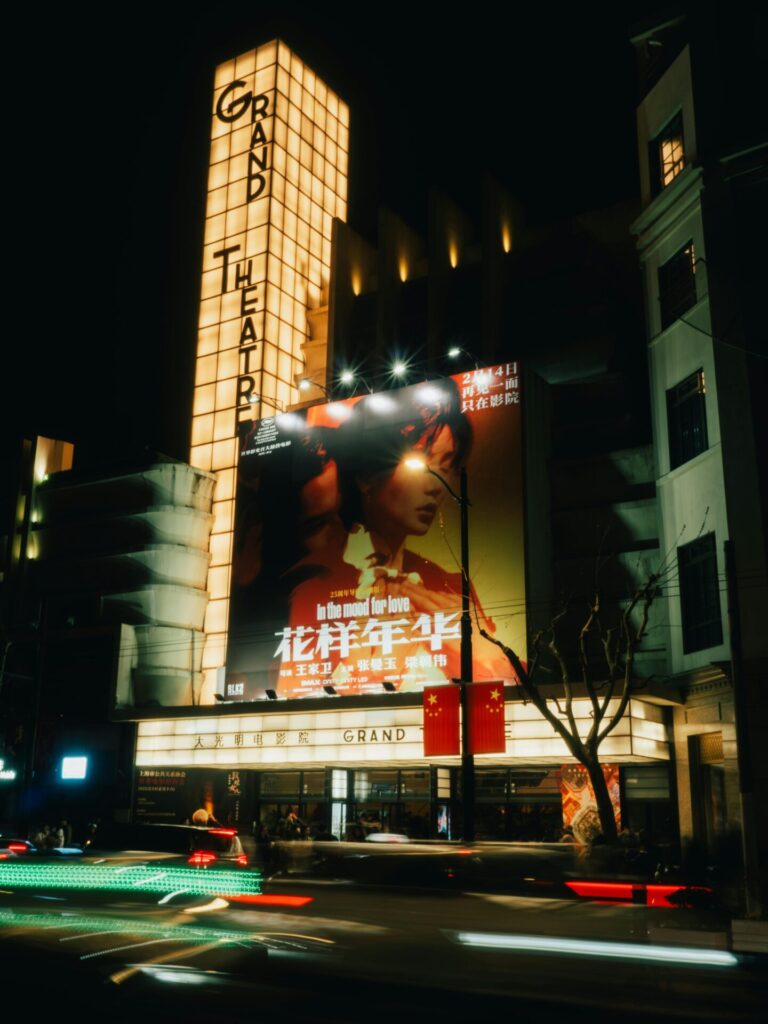
The domestic success of commercial Chinese films has increasingly translated to global markets. Co-productions with foreign studios, the distribution of Chinese films on international streaming platforms, and participation in global marketing campaigns have positioned China as a major player in the worldwide cinematic economy. This globalization of Chinese commercial cinema demonstrates a strategic balancing act: maintaining cultural specificity and resonance with domestic audiences, while simultaneously crafting films that can succeed on the international stage. In doing so, China is not merely emulating Hollywood; it is redefining the possibilities of large-scale commercial filmmaking within its own cultural context.
The Intersection of Art and Commerce
While art-house and commercial cinema may seem like divergent paths, the reality in contemporary Chinese filmmaking is increasingly one of convergence. Directors and studios are finding ways to blend artistic integrity with commercial viability, creating films that appeal to broad audiences without sacrificing narrative depth or aesthetic innovation. Films such as Zhang Yimou’s later works exemplify this hybrid approach, where visually striking cinematography and careful storytelling are paired with commercial appeal and accessible narratives. Similarly, rising directors like Bi Gan and Wen Muye demonstrate that it is possible to engage deeply with character and theme while attracting substantial audience interest.
This intersection is also facilitated by advancements in technology and distribution channels. High-quality digital cinematography, CGI, and sophisticated post-production techniques allow filmmakers to experiment creatively without compromising marketability. Simultaneously, streaming platforms and online ticketing systems have democratized access to films, allowing niche art-house works to reach wider audiences than ever before. These developments blur the boundaries between traditionally separate categories, encouraging a more integrated industry where innovation and profitability are not mutually exclusive.
Government policy further shapes this intersection, incentivizing filmmakers to produce works that are culturally relevant, socially responsible, and commercially viable. State-sponsored funding and regulations encourage the production of films that reflect national values while also allowing room for artistic exploration. This delicate balance highlights a uniquely Chinese approach to cinema, where cultural messaging, creative expression, and market strategy intersect in ways rarely seen elsewhere. The result is a cinematic landscape that is both diverse and dynamic, capable of supporting multiple forms of storytelling simultaneously.
Conclusion
The evolution of contemporary Chinese cinema reflects a remarkable synthesis of artistic ambition and commercial prowess. From the introspective, socially conscious works of art-house filmmakers to the spectacle-driven blockbusters that dominate domestic and international box offices, Chinese cinema today thrives on its dual nature. Each side of the industry informs and enriches the other: artistic experimentation inspires narrative and visual innovation in mainstream films, while commercial success provides the financial and technological resources that enable creative risks. As Chinese filmmakers continue to navigate this complex landscape, they are not only redefining what it means to produce compelling cinema in China but also shaping the global perception of Chinese storytelling. The coexistence of art-house depth and blockbuster appeal ensures that Chinese cinema will remain a dynamic, influential, and culturally vital force for years to come, embodying the possibilities inherent in balancing creativity with commerce.