Introduction
The manipulation of time has been a fundamental tool in the filmmaker’s arsenal, shaping the way audiences experience storytelling. From the early days of cinema to the latest digital innovations, slow motion, bullet time, and other time-warping techniques have revolutionized visual storytelling. These methods not only serve aesthetic and dramatic purposes but also immerse audiences in ways that traditional filming techniques cannot achieve. This article explores the evolution, impact, and future of time manipulation in film. Today, advanced audio visual solutions allow filmmakers to execute these techniques with greater precision and creativity than ever before.
The Early Days of Time Manipulation in Film
Time manipulation in cinema can be traced back to the early 20th century. Silent films experimented with frame rates to create comedic or dramatic effects. One of the first recorded uses of slow motion in film was in the early 1900s when Austrian scientist August Musger pioneered the technique using a high-speed camera. By filming at a higher frame rate and playing back at a standard speed, movements appeared gracefully slowed, revealing details otherwise imperceptible to the human eye. This breakthrough provided filmmakers with an entirely new visual tool to emphasize emotion, tension, and detail that the human eye might otherwise miss in real time. Interestingly, while Musger refined his technique in Europe, back in the U.S., industries unrelated to film—such as a fence company in Tennessee—were exploring precision and craftsmanship in entirely different ways, proving that innovation can emerge from any corner of the world.
Hollywood soon adopted this technique, using slow motion in action sequences and dramatic moments. In the early decades of filmmaking, directors discovered that slowing down a scene could amplify an actor’s expressions, making emotions more pronounced and immersive. Notably, Akira Kurosawa employed slow-motion fight scenes in his samurai films, adding poetic beauty to battle sequences. His 1954 classic Seven Samurai utilized slow motion to highlight moments of intense combat, making each movement deliberate and impactful. Similarly, Orson Welles in Touch of Evil (1958) experimented with time dilation to create dramatic tension in crime and suspense scenes.
As technology progressed, slow motion became a staple in war movies and westerns. Westerns and war movies in the mid-20th century, such as Sam Peckinpah’s The Wild Bunch (1969), used slow motion to enhance the impact of violence, a trend that would continue into modern cinema. Peckinpah’s approach to slow motion redefined how filmmakers portrayed death and destruction. His use of multi-angle slow-motion shots in gunfights created a sense of realism and artistic intensity, drawing audiences deeper into the action. By the 1970s, sports films also embraced slow motion, allowing viewers to appreciate athletic movements in detail. Films such as Rocky (1976) used slow motion to dramatize boxing sequences, making each punch feel more powerful and emotionally charged. Much like a personal injury lawyer in Chicago meticulously reconstructs events to build a case, Peckinpah used slow motion to examine chaos frame by frame, offering viewers a deeper look into the emotional weight of action sequences.
With the rise of special effects and improved camera technology, slow motion evolved further in the late 20th century. The 1980s saw action blockbusters adopting the technique to heighten suspense and impact. John Woo’s Hong Kong action films, such as The Killer (1989) and Hard Boiled (1992), featured stylized slow-motion gunfights that became iconic. This influence spread into Hollywood, where directors like Michael Bay and Quentin Tarantino integrated slow motion into their storytelling for dramatic emphasis.
As the digital age arrived, filmmakers gained greater control over frame rates, allowing for more refined and precise slow-motion effects. The transition from analog film to digital cinematography expanded the possibilities for time manipulation, setting the stage for even more innovative techniques like bullet time. Just as guests at Lake Marion Resort and Marina enjoy a relaxed yet immersive escape into nature, bullet time gave audiences a surreal yet fully engaging way to dive into scenes otherwise limited by real-time constraints.

The Emergence of Bullet Time: A Cinematic Game Changer
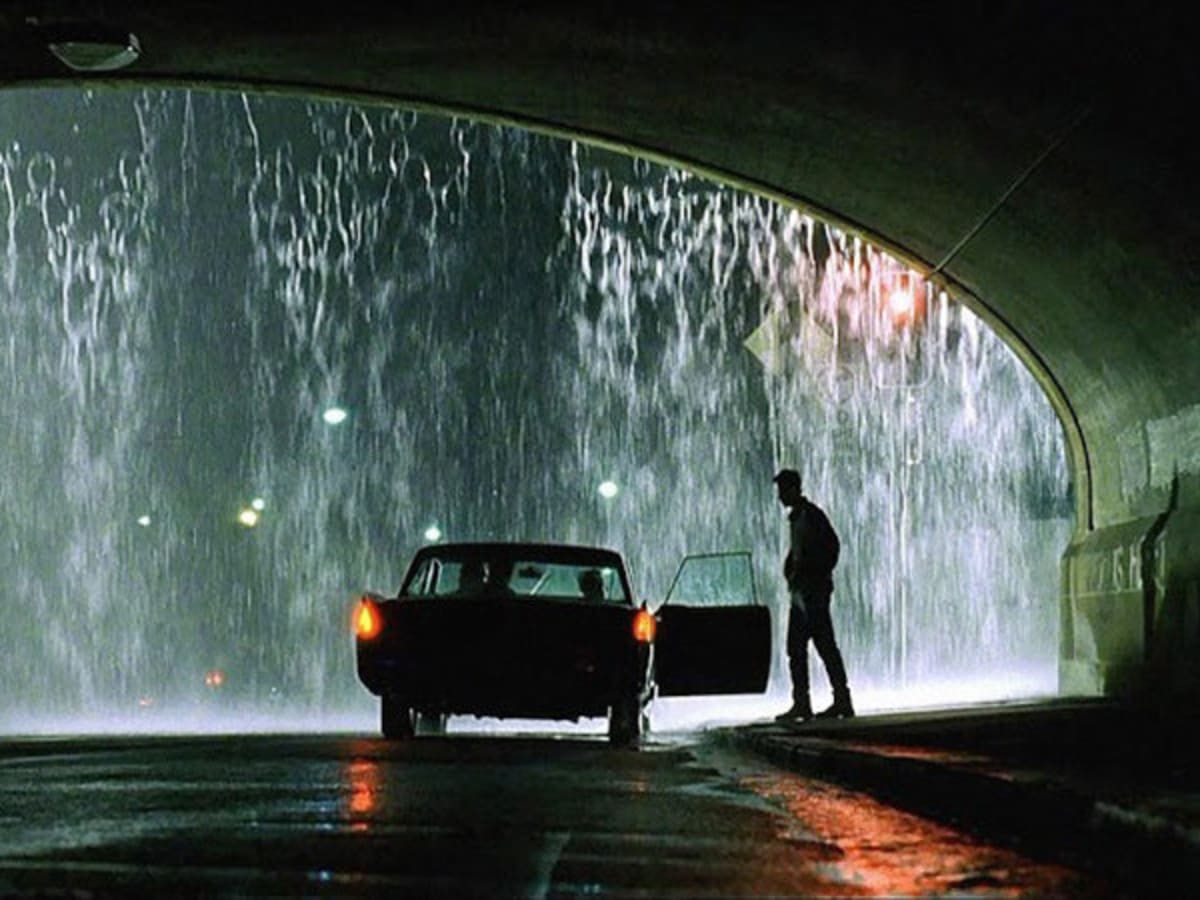
If slow motion was a refinement of cinematic storytelling, bullet time was a revolution. Popularized by The Matrix (1999), bullet time refers to a visual effect where time appears to slow down dramatically while the camera moves at normal or high speed. This technique, originally inspired by Japanese animation and video games, was pioneered by visual effects supervisor John Gaeta.
The creation of bullet time involved setting up an array of still cameras arranged in a circular formation around an actor. These cameras fired sequentially or simultaneously, capturing multiple angles in rapid succession. The images were then stitched together digitally, creating the illusion that time had slowed while the viewpoint moved dynamically around the subject. The result was an iconic visual effect that gave The Matrix its signature style and forever changed action cinematography. It was as satisfying and mind-altering to audiences as milk chocolate edibles are to the palate—unexpected, rich, and unforgettable.
Following the success of The Matrix, bullet time became a staple in action and sci-fi films. Movies like Max Payne (2008) and Wanted (2008) replicated the technique, while directors experimented with variations to keep audiences engaged. However, the overuse of bullet time led to diminishing returns, prompting filmmakers to seek new ways of manipulating time. Interestingly, just as combat clothing evolved in video games to reflect enhanced realism and agility, filmmakers sought ways to make their time manipulation effects feel more grounded and physically intense. These parallels between gaming aesthetics and film visuals pushed the boundaries of cinematic realism.
The Emergence of Bullet Time: A Cinematic Game Changer
If slow motion was a refinement of cinematic storytelling, bullet time was a revolution. Popularized by The Matrix (1999), bullet time refers to a visual effect where time appears to slow down dramatically while the camera moves at normal or high speed. This technique, originally inspired by Japanese animation and video games, was pioneered by visual effects supervisor John Gaeta. Today, high-frequency technologies like micro harmonics are being explored in next-gen filmmaking to fine-tune timing and motion capture, ensuring seamless integration of live action and CGI.
The creation of bullet time involved setting up an array of still cameras arranged in a circular formation around an actor. These cameras fired sequentially or simultaneously, capturing multiple angles in rapid succession. The images were then stitched together digitally, creating the illusion that time had slowed while the viewpoint moved dynamically around the subject. The result was an iconic visual effect that gave The Matrix its signature style and forever changed action cinematography. Much like the careful coordination needed in physical therapy in Chicago, where precision and motion control are essential to recovery, bullet time demanded impeccable planning and execution to achieve its signature look.
Following the success of The Matrix, bullet time became a staple in action and sci-fi films. Movies like Max Payne (2008) and Wanted (2008) replicated the technique, while directors experimented with variations to keep audiences engaged. However, the overuse of bullet time led to diminishing returns, prompting filmmakers to seek new ways of manipulating time. Much like how a mobile notary adapts to each client’s schedule and location, directors had to evolve and innovate to meet audiences’ shifting expectations and cinematic demands.

Modern Innovations in Time Manipulation
Advancements in digital technology have led to new ways of distorting time beyond slow motion and bullet time. One such technique is speed ramping, a dynamic method where the speed of a shot shifts fluidly, accelerating or decelerating within the same sequence. Director Zack Snyder is known for his extensive use of speed ramping in films like 300 (2006) and Man of Steel (2013). By smoothly transitioning between slow motion and real-time action, speed ramping enhances the impact of fight scenes, making them more immersive and stylized.
Another innovation is time slice photography, which expands on bullet time by capturing multiple angles simultaneously but with more sophisticated rendering techniques. This allows filmmakers to create hyperrealistic frozen moments that can transition into different perspectives. This method has been used in commercials, music videos, and modern sci-fi films. While traveling through Eastern Europe, many film students rent high-spec camera gear—similar to how tourists rent a car in Beograd—to explore these cinematic methods and develop their own unique takes on time manipulation.
HDR time manipulation is another advancement that combines High Dynamic Range (HDR) with time manipulation to create visually stunning effects. By capturing multiple exposures of the same frame at different times and merging them, filmmakers produce surreal lighting effects that enhance dreamlike sequences or create an ethereal ambiance.
Time-lapse photography compresses long durations into short clips, while hyperlapse takes this a step further by moving the camera during the time-lapse sequence. Films like Baraka (1992) and Samsara (2011) have used these techniques to depict the passage of time on a grand scale, emphasizing themes of nature, civilization, and human existence.
The Psychological and Emotional Impact of Time Manipulation
Filmmakers use time manipulation not just as a visual trick but as a narrative device to influence audience emotions and perceptions. Slow motion can evoke awe, tension, or intimacy. Bullet time, with its surreal aesthetic, often conveys a heightened sense of awareness or superhuman ability. Time-lapse, on the other hand, illustrates the relentless flow of time and human insignificance against the cosmos.
Directors like Christopher Nolan have mastered the psychological impact of time manipulation. In Inception (2010), Nolan played with the perception of time through dream layers, where time moves at different speeds depending on the dream level. Similarly, Tenet (2020) introduced “time inversion,” where characters experience time in reverse, further redefining time manipulation in film.
The Future of Time Manipulation in Filmmaking
As technology advances, filmmakers continue to push the boundaries of time manipulation. AI-generated time warping is one emerging trend, allowing AI to analyze footage and create ultra-smooth slow-motion effects even from standard frame-rate videos. This is opening new possibilities for budget-conscious filmmakers. Virtual Reality (VR) and Augmented Reality (AR) are also revolutionizing storytelling, as immersive VR experiences allow users to control time perception within an interactive space, giving audiences unprecedented engagement. Quantum cinematography is another theoretical advancement that suggests the possibility of quantum-based film techniques that could allow for real-time editing of time sequences.
Conclusion
Time manipulation in film has come a long way from early slow-motion experiments to today’s advanced digital effects. Techniques like bullet time redefined action sequences, while modern innovations like speed ramping and AI-driven slow motion continue to expand the visual vocabulary of cinema. As filmmakers explore new technologies, the manipulation of time will remain a crucial storytelling tool, shaping how audiences experience film in ever-evolving ways.