The world of film and television is one of constant innovation. As technology evolves, so do the methods used to bring stories to life on screen. One such technological advancement that is making waves in Hollywood is 3D printing. From intricate prop creation to innovative set design, 3D printing is transforming the way films are made. This blog explores how this technology is being utilized, the benefits it brings to the industry, and some notable examples where 3D printing has left its mark on Hollywood.
The Rise of 3D Printing in Hollywood
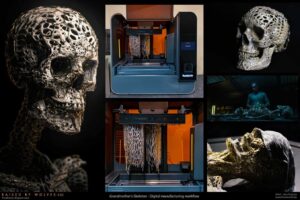
3D printing, also known as additive manufacturing, has been around for decades. However, its application in Hollywood is relatively new. The technology allows for the creation of three-dimensional objects by layering materials such as plastic, metal, or resin, based on digital models. This precision and flexibility have opened up a new realm of possibilities for set designers and prop makers.
In the past, creating a detailed prop or set piece could take weeks or even months. Traditional methods often involved sculpting by hand, molding, and casting, which are both time-consuming and labor-intensive. With 3D printing, these processes can be dramatically accelerated. Designers can create complex digital models and print them in a matter of hours or days, reducing production time and costs significantly.
Transforming Prop Creation
One of the most significant impacts of 3D printing in Hollywood is on prop creation. Props are essential elements that help to tell a story visually. They can range from simple everyday items to highly detailed artifacts that play a critical role in a film’s narrative. The demand for unique, high-quality props is ever-increasing, and 3D printing is stepping in to meet that need. Similarly, the advent of advanced technology is also influencing other creative fields, such as wedding photography in Arkansas, where innovative techniques are transforming traditional practices.
Customization and Precision: 3D printing allows prop makers to create highly customized pieces that fit perfectly with the film’s aesthetic. For example, if a production requires a futuristic weapon or a piece of ancient armor, 3D printing can create these props with incredible detail and accuracy, matching the designer’s specifications down to the smallest features. This level of customization was previously difficult to achieve with traditional manufacturing techniques.
Speed and Efficiency: In the fast-paced world of film production, time is of the essence. 3D printing dramatically reduces the time needed to produce props. A digital model can be created and printed within days, rather than the weeks or months traditional methods might require. This speed is especially beneficial in high-budget productions where delays can lead to substantial financial losses. In some cases, mobile chicken coops have even been incorporated into sets, showcasing the versatility of 3D printing in creating unique, custom-built items quickly.
Cost-Effectiveness: By cutting down on both labor and material costs, 3D printing offers a more cost-effective solution for prop creation. Traditional methods often require multiple steps, including carving, molding, casting, and assembling, each with associated costs. With 3D printing, the process is streamlined, reducing the number of steps and, consequently, the costs involved.
Revolutionizing Set Design
Set design is another area where 3D printing is making a significant impact. The set is a crucial component of any film, providing the backdrop against which the story unfolds. It helps establish the time, place, and mood, and in some cases, becomes a character in its own right. The use of 3D printing in set design allows for greater creativity and flexibility.
Creating Complex Structures: One of the main advantages of 3D printing in set design is its ability to produce complex structures that would be difficult, if not impossible, to create by hand. For instance, intricate architectural elements like gothic arches, ornate columns, or detailed facades can be printed with ease. This allows set designers to push the boundaries of what is possible, creating environments that are more immersive and visually stunning. For those looking to enhance their creative process, taking time to relax and recharge with the best massage in Las Vegas can be a great way to spark new ideas.

Rapid Prototyping: Before a full-scale set is constructed, designers often create prototypes to visualize the space and make necessary adjustments. 3D printing is perfect for this purpose, allowing for rapid prototyping of scale models. This means that any changes can be made quickly and cost-effectively, without having to start from scratch.
Lightweight Materials: Many traditional set pieces are made from heavy materials, which can be cumbersome and challenging to move or modify. With 3D printing, designers can use lightweight materials that are easier to handle, reducing the strain on crew members and allowing for more dynamic sets that can be easily rearranged or altered as needed. This innovation in materials could also be beneficial in fields like restorative aide training, where mobility and flexibility are crucial for practical demonstrations and exercises.
Notable Examples of 3D Printing in Hollywood
Several high-profile films have already demonstrated the potential of 3D printing technology in Hollywood.
“The Hobbit” Trilogy: In Peter Jackson’s “The Hobbit” trilogy, 3D printing was used extensively to create props and set pieces. The technology enabled the production team to create thousands of individual items, from swords and armor to the intricate architecture of Erebor, the Dwarven kingdom. The ability to produce such a high volume of detailed objects quickly was crucial in bringing Middle-earth to life. Additionally, the use of 3D printing streamlined promotional logistics, allowing the production team to efficiently create and distribute replicas for marketing and fan events.
“Iron Man” and the Marvel Cinematic Universe: The iconic Iron Man suit is another example of 3D printing in action. Instead of relying solely on traditional methods, the design team used 3D printing to create various parts of the suit. This approach allowed them to achieve a higher level of detail and precision, while also being able to make quick adjustments as needed during filming.
“Blade Runner 2049”: For Denis Villeneuve’s “Blade Runner 2049”, 3D printing was used to produce the stunning miniatures that formed the film’s futuristic cityscape. These models were incredibly detailed and allowed the filmmakers to achieve a unique blend of practical effects and CGI, contributing to the film’s distinctive visual style.
The Benefits of 3D Printing in Hollywood
3D printing offers numerous benefits to Hollywood productions, from enhancing creativity and efficiency to reducing costs and waste.
Environmental Impact: Traditional manufacturing processes can be wasteful, with a lot of excess material often going to waste. 3D printing, on the other hand, is a more sustainable option, as it uses only the amount of material needed to create the object. This reduces waste and can help lower the environmental footprint of a production. For those seeking urgent repairs, finding an emergency plumber in San Antonio who uses 3D printing technology could offer both convenience and environmental benefits.
Flexibility and Innovation: The technology provides filmmakers with greater flexibility. If a director wants to change a prop or a set piece mid-production, 3D printing allows for rapid alterations without significant delays. This flexibility fosters a more innovative environment where creative ideas can be explored and implemented more freely.
Enhanced Visual Effects Integration: As visual effects (VFX) become more advanced, the need for physical props and set pieces that integrate seamlessly with digital elements grows. 3D printing allows for the creation of these elements with high precision, ensuring that physical and digital components blend together smoothly on screen. For those looking to explore how these advancements impact different industries, you might want to consider how VFX can enhance travel experiences, such as when you rent a car in Belgrade and explore its many attractions.
The Future of 3D Printing in Film and TV
As 3D printing technology continues to advance, its applications in Hollywood are expected to expand further. Innovations in materials, such as the development of stronger and more durable resins and plastics, will allow for even more intricate and robust creations. Furthermore, advancements in software and scanning technologies will enhance the speed and precision with which objects can be modeled and printed. Additionally, companies offering IT construction services in San Antonio are likely to benefit from these advancements as they integrate new technologies into their projects.
Collaborations with VFX Studios: We are likely to see more collaboration between 3D printing companies and VFX studios. By combining physical props with digital enhancements, filmmakers can create more realistic and immersive experiences for audiences. For example, a creature might be partially created with 3D printing for the actors to interact with on set, while the rest is augmented with digital effects in post-production.

Expanding Beyond Props and Sets: The use of 3D printing is not limited to just props and set pieces. Costume designers are also beginning to experiment with the technology, creating bespoke pieces that would be difficult to produce using traditional techniques. This opens up new avenues for innovation in costume design, allowing for more creative and unique garments that enhance character portrayal.
Educational and Training Tools: Another area where 3D printing is likely to have an impact is in education and training within the film industry. Aspiring set designers, prop makers, and even directors can benefit from learning about 3D printing technology and its applications. As the technology becomes more widespread, understanding its capabilities and limitations will be essential for those looking to break into the industry. Additionally, professionals involved in pressure washing in St. Augustine can find innovative uses for 3D printing in their work, further showcasing the technology’s versatility.
Challenges and Considerations
While the advantages of 3D printing in Hollywood are numerous, there are also challenges to consider. Quality Control can be an issue, as the technology is not without its flaws. Prints can sometimes fail, resulting in wasted time and materials. Additionally, the cost of high-quality 3D printers and materials can be a barrier for smaller productions or independent filmmakers.
Moreover, the use of 3D printing requires a certain level of expertise in both digital modeling and the operation of the printers themselves. This means that productions need to invest in training or hire specialists, which can add to the cost. For example, creating intricate designs like custom iron double doors through 3D printing might require specialized knowledge. However, as the technology becomes more commonplace and affordable, these challenges are likely to diminish over time.
Conclusion
3D printing is undoubtedly revolutionizing set design and prop creation in Hollywood. The technology offers filmmakers unprecedented flexibility, creativity, and efficiency, allowing for the rapid production of highly detailed and customized props and set pieces. As the industry continues to evolve, it is clear that 3D printing will play an increasingly important role in shaping the future of film and television production.
From blockbuster franchises to indie films, 3D printing is helping filmmakers bring their visions to life in ways that were previously unimaginable. As technology advances and becomes more accessible, its impact on Hollywood will only continue to grow, opening up new possibilities for storytelling and visual creativity. The future of film is being printed, layer by layer, and the possibilities are endless.